Wednesday, 11 October 2017

China tries to steer loans to small businesses


Date: Wednesday 11, October 2017
Media: The New York Times


What happened?
This news is about how China tries to steer more bank loans to small businesses. They are trying to do this by lowering banks' reserves. 
China is taking measures to inject money decreasing the requirements of banks and in a way that  doesn't pose a greater debt to the country.

Whom and where it affects?
It affects the small businesses of China.

What sort of public or private institutions are involved?
The Popular Bank of China, Standard & Poor, Central Bank of China, Tsinghua University, China Government and China Financial Reform Institute.

Why is it important for Banking and Finance?
Because it talks about the financial system of China, bank loans and the reserve ratio.  

What do you think will be the consequences in the foreseeable future?
It stimulates the economy, flowing more credit and improving the purchasing power of the population. If these measures were not correct, the consequences could seriously affect the Chinese financial system, and consequently, the global economy could be harmed.

Key words:
China, Bank Loans, Financial system, Small Business, Reserve Ratio.

Bank of England tells lenders to find £116bn to help prevent bailouts

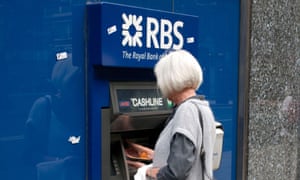
retired woman using a cash dispenser at a Royal Bank of Scotland ATM in Central London


Date: Monday 2, October 2017 
Media: The Guardian

What happened?

The Bank of England has sent and order to the financial institutions to find £116bn. A series of measures to avoid taxpayers being forced to bail out the banking sector, like the one that took place a decade ago with the Royal Bank of Scotland ans Lloyds Banking Group. Those £116bn, will come from rejigging their existing borrowings, and emissions from banks, which become bonds, in case they reach the times of crisis.

Whom and where it affects?

It positively affects taxpayers because they will no longer have to pay bank bailouts and also for banks because they will have corrective measures in case of insolvency.

What sort of public or private institutions are involved?

Bank of England.
Financial Institutions of England.

Why is it important for banking and finance?

The importance of banking is paramount for the development of the economy, since its main function is to provide funds to public, private and natural persons who need them to meet payment commitments with suppliers, goods and services. The economy is a component, which is reflected in growth or decrease and which in turn significantly affects the development of banking and specifically related to deposits and credits. The bank is obliged to protect the money of its depositors, this being the main reason why they have to take care of the destination of the resources deposited by their clients. The great challenge of banks, as economic indicators continue to improve, is the channeling of more resources for private sector financing.

What do you think will be the consequences in the foreseeable future?

In case of a financial crisis, investors will not lose their money because the Bank of England has created a deposit to secure the funds and savings that have taxpayers.

Key words: Bonds, Taxpayers, Bank of England, Bailout.

Emergency ECB cash can slow a bank's rescue: Knot

Resultado de imagen de banco central holandés

Link: https://www.reuters.com/article/us-ecb-banks-cash/emergency-ecb-cash-can-slow-a-banks-rescue-knot-idUSKCN1C41SC


Date: September 29th,  2017 
Media: REUTERS 


  • What happened?
Klaas Knot, President of the Nederlandsche Bank, talked about the consequences of use the Emergency Liquidity Assistance (ELA) that can have the effect of delaying the inevitable.
The new also talk about the situation of the Popular Bank which in June received emergency cash from the Bank of Spain hours before it was declared likely to fail by the European Central Bank and sold to larger rival Santander. 
At the end Knot mention that banks and the Single Resolution Board in Brussels should not always count on the Emergency Liquidity Assistance. 

  • Whom and where it affects?
This affects to the Single Resolution Board in Brussels, all banks that have received the Emergency Liquidity Assistance, Central Banks and private banks. 

  • What sort of public ir private institutions are involved?
 Single Resolution Board in Brussels and European Central Banks

  • Why is it important for Banking and Finance?
Because it considers the economic decisions and policies used, underlying the fact that if they are not effective they can generate uncertainty in the financial and banking sector. 

  • What do you think will be the consequences in the foreseeable future?
Among the immediate consequences, is the uncertainty and distrust of economic policies and the validity of the possible aid that the European Central Bank offers, questioned in this way its effectiveness.


Key words: Emergency Liquidity Assistance, European Central Bank, Santander, Popular Bank,  Single Resolution Board

Enron: the smartest guys in the room


  • Title: Enron, the smartest guys in the room
  • Duration:1:45:15
  • Country: United Sates of America
  • Director: Alex Gibney
  • Script: Alex Gibney
  • Year: 2005
  • Trailer: https://youtu.be/-w6duQhWuVk
  • Synopsis:

It is a documentary that portrays one of the main financial scandals of the history of the United States. Based on the best-selling "The Smartest Guys in the Room" Fortuna, Bethany McLean and Peter Elkind, screenwriter and director Alex Gibney tells how the top executives of the company Enron, the seventh most important of the States United States, made more millions of dollars while employees and shareholders lost everything.


 'Banking and finance' in the film

The film try to talk about how the dark side of finance always see the light, that means that all the personal statements, videotapes and audio that have serve to show the excesses by the directive leadership and the moral vacuum of the company which we are accustomed to see in the buisness world its only a way of showing  the fact of lack of confidence that led the company to fall into bankruptcy, as in the 2:17 minute said "it´s a story about people and not about numbers"

For us also had been interesting the fact that politics and finace are extremetly relationated, at the minute 6:49; we can see how Bush defends the company without any commitment.

Also at 42:21 minute one of the experts talks about the deceit on the part of the leader of the company, because in his speech he tried to send a message that little resembled the business reality. 

One of the most tragic parts of the documentary is in the 1:42:34 when he shows the letter of suicide of Clifford Baxter who unable to bear the consequences of the broken bank, decided to take his own life.


Personal commentary

Personally the film has liked us very much because without any objection it tries to tell the truth, the relationship between politics and companies that finance many parties, the deception of prosperity in certain sectors that are in doubt their innovation and finally the lack of confidence that we believe is key to bankruptcy.
Its iportant to know that its one of the biggest corruption scandals in US financial history, with political repercussions, spreading even to the White House. Through interviews with workers of the company, they tell how they managed in such a short time to turn it into a financial empire. Executives of Enron, are accused of financial fraud and personal benefits of more than $ 1 billion before the bankruptcy of the company. Thanks to the enron case, the sarbandes oxley law was drawn up, which establishes internal control measures to prevent companies that are publicly traded from making frauds.


Here is the link for the full film:

Wednesday, 4 October 2017

Boiler room


Title: Boiler room
 Duration: 120 min
 Country: United Stated
 Director: Ben Younger
 Script: Ben Younger
 Year: 2000
 Synopsis: In this drama that explores greed and corruption in American business, Giovanni Ribisi plays Seth Davis, an intelligent and ambitious college dropout who runs a casino in his apartment. Eager to show his father that he can succeed, Seth lands a job with a small stock brokerage firm. He is given a space in the company's "boiler room," where he makes cold calls to prospective clients. As it turns out, Seth has a genuine talent for cold calling, which gains him the approval of his superiors, the admiration of his father, and the attention of one of his co-workers, Abby Hilliard (Nia Long). However, the higher up the ladder Seth rises, the deeper he sinks into  a quagmire of dirty dealings, until he's breaking the law in order to keep his bosses happy and his paychecks coming.

'Banking and finance' in the film
One of the main scenes where you can see a banking and finance issue is when Seth, the main character, is still a trainee at J.T. Marlin, and he’s trying to sell some stocks to a doctor, and one of the senior brokers takes over the call, so he can show him how to close the deal. This way he shows him how to sell stocks of companies that don’t exist.
Another important scene is when Greg, the man that got Seth the interview for J.T. Marlin, explains briefly to him how being a broker works. He gives Seth a list of people that would be easy to defraud: male, 45, Mid-West, 150.000 $ monthly income, and most importantly, never a women.
Around the half of the film, we can see how Seth, while he’s still a trainee, closes his first stock sale for 10.000$.  
Also, there’s a scene where Seth confess to one of his coworkers that what they’re doing at work is illegal, because Michael, the owner of the company, participates in the companies that are trying to go public (IPO), so there’s a conflict of interest, because he cannot manage an IPO and at the same time buy stocks of those companies.
Personal commentary
We didn’t particularly enjoy the film, just because it seems to imply that if you want to succeed as a broker, you have to scam people. It shows how people can get easy money in exchange of ripping off innocent people. That’s something we obviously don’t agree with, so as a film it is entertaining but, apart from that, we wouldn’t recommend it.

The International


  • Title: The International  
  • Duration: 118 min
  • Country: USA
  • Director: Tom Tykwer
  • Scrip: Eric Warren Singer
  • Year: 2009
  • Synopsis: Interpol agent Louis Salinger (Clive Owen) and Manhattan District Attorney Eleanor Whitman (Naomi Watts) are planning to bring to justice one of the world's largest banks. Uncovering a myriad of illegal activities, Salinger and Whitman follow the trail of financial operations from Berlin to Milan, from New York to Istanbul, in a high-risk international persecution that puts their lives at risk

‘Banking and Finance’ in the film

In this subject we have studied the bank functions, and the main is the financial intermediation. In this film we can see this function, where they keep the eye on the deposits  fall down and also in how to control debs as a way to control the rest of things.
In the middle of the worldwide financial crisis, this film makes a criticism about the corruption on the bank sector.
«¿Why they support battles and bet money on them?», ask an African council to the bank general manager, who offers money and weapons to give a coup.
«We are not interested in battles, but yes on debts that are generating this battles, because who controls debs, controls everything», banker answer.

Personal commentary

It is a very interesting political - financial film, because it shows the other side of the story, the side that the majority of people doesn´t know. The influences of the financial sector and also of the government shown on this film look like an imaginary scenery, but it is real. It doesn´t matter the critical situation of some countries, or the people issues, what really seems important for them is to control everything, to influence on everybody.

Money for Nothing: Inside the Federal Reserve


  • Title: Money for Nothing: Inside the Federal Reserve
  • Duration: 104 min.
  • Country: United States of America
  • Director: Jim Bruce
  • Script: Jim Bruce
  • Year: 2013
  • Trailer: https://www.youtube.com/watch?v=iXlXem1zI_A
  • Synopsis: The documentary focused on the mission that has the U.S. Federal Reserve as the regulating institution of the global financial system and the impact it has on it, since its creation in 1913. They also point the decisions made by senior FED officials, which led to a collapse of the financial system in 2008.


"Banking and finance" in the film

The deregulation that the United States federal reserve has created and that the financial institutions have used to enrich themselves, and that has stoned the bases of the financial system that are faith and trust.
Since 1907, when the banks went bankrupt, it was the trigger for the government of that time to realize that they needed a regulatory body, when the federal reserve of the United States was born in 1913, at a time when many other countries Europeans already had regulatory bodies, which kept them away from financial problems such as the United States was experiencing at the time.
He also mentions stages of the global financial system such as the gold standard and then the Bretton Woods agreement, the latter made it possible for the American economy to position itself in the place it now occupies, the first worldwide.
Although the main objective is the deregulation that gave rise to the financial crisis of 2008, and that the FED allowed that it was developed, and that explains in this fragment of the documentary:


In conclusion, the documentary shows us that financial policies are not good because of the times they are adjusted, but because of the importance of their results in the long term, and helps us to understand the functions of one of the most important central banks, most important in the world.

Personal commentary

In our opinion the film makes us understand clearly and simply how the Federal Reserve really works, and why it plays such an important role in our lives. There is a great lack of awareness on the part of the citizens about the Federal Reserve. Therefore, the documentary covers all issues chronologically, citing many dates and historical bubbles, showing market charts or news clips to facilitate understanding.

Once the documentary is completed, it makes us ask questions or discuss the role of federal regulators in times of financial collapse as it was in 2008 and it it could be repeated in a new crisis in the future.